Cart 0
Talk Now
Talk to an Expert

Construction & Trades Custom T-Shirts + Workwear

On an active jobsite, small details create big problems—two crews show up in the same color, a foreman can’t be found fast, or new hires blend in during a safety walk. Our custom construction t-shirts are built for real field conditions: dust, heat, wash cycles, and the constant movement of people and gear.

If you’re ordering custom work shirts with logo for multiple roles, we keep the process predictable. You’ll get a clear proof first, adjust it while changes are easy, and then we print exactly what you approve—so delivery day matches expectations, even when your size list keeps moving.

Construction & Trades Custom T-Shirts + Workwear

Request Quote
Design Now
Benefits Ticker — Sentence Case

Proof-first approvals so your crew shirts print exactly as approved. Bulk-friendly ordering for construction teams, subcontractors, and multi-crew projects. Hi-vis options and readable placements (left chest + bold back) for jobsite visibility. Reorder-ready specs so new hires and replacements match the original run.

  • Proof-first approvals so your crew shirts print exactly as approved
  • Bulk-friendly ordering for construction teams, subcontractors, and multi-crew projects
  • Hi-vis options and readable placements (left chest + bold back) for jobsite visibility
  • Reorder-ready specs so new hires and replacements match the original run

Select from the wide range of products

Unisex/Mens

Ready for your logo, design, or message

Womens

Soft, modern fits—perfect for custom prints.

Kids

Match your group with kid-friendly sizing

Choose Your Best Fit

Jobsite Crew Shirts That Make Teams Easy to Spot

When trucks are unloading and the schedule is tight, you don’t want anyone guessing who belongs where. Strong construction crew t-shirts help crews look organized, reduce confusion during shift changes, and make it obvious who’s leading—without needing complicated designs.

Practical layout guidance that works on jobsites:

Keep the front simple (small left-chest mark people can wear daily)

Use the back for the “read from a distance” identifier (company/crew/role)

Prioritize high contrast so logos stay visible in sun, shade, and shop lighting

Save the approved specs so reorders don’t turn into a redesign project

Real-world scenario (multi-crew rollout):
A common order is 90–240 pieces across two field crews and a small office team, plus extras for late additions. The smoothest flow is one approved proof, then sizes collected in a single spreadsheet grouped by crew (Crew A / Crew B / Office) with youth/adult separated if needed. Once the proof is locked, production stays clean—even if two people swap sizes at the last minute.

Request Quote

Project Kickoff & Mobilization Shirts Crews Keep Wearing

Kickoff apparel works when it feels like a uniform your team actually wants to keep using—not a one-week shirt that ends up in the back of the truck. The most successful setups start with a “base uniform” that can run across multiple projects, with small updates (job name, year, or crew line) when needed.

This is where contractor uniforms with logo shine: consistent placement, repeatable garment choices, and a look that holds up on the job. For larger mobilizations, bulk construction t-shirts keep onboarding simple—everyone matches, supervisors stand out, and you’re not scrambling for replacements mid-week.

Timeline that protects the schedule:

3–4 weeks out: confirm garment types + decide placement direction (front/back/sleeve)

2–3 weeks out: approve the proof + start size collection by crew/role

1–2 weeks out: handle late adds as a clean add-on run using saved specs

Design Now

Site Walks, Safety Meetings, and Sorting Built for Late Adds

Safety meetings, inspections, and site walks are where clarity matters most. Apparel should help you sort roles quickly—especially when PPE layers cover part of the print. A small front mark plus a bold back identifier makes it easier to spot leads and keep groups organized without shouting names across the site.

Planning checklist (fast, practical, proven):

Counts: crews + supervisors + office visits + a small buffer

Sizes: collect early and keep roles grouped (field, lead, office)

Colors: choose 1–2 dependable colors you can reorder without mismatch

Proof deadline: set an approval date so production can start on time

Buffer stock: plan extras for replacements and new hires

For repeat wear, lean toward durable work t-shirts and treat late additions as reorder-ready specs: same garment, same placements, same ink—no last-minute improvising. Left chest logo + full back print remains the most functional layout for fast recognition.

Request Quote

Foreman, Supervisor, and Office Staff Apparel That Builds Trust

On a jobsite, “Who do I ask?” comes up constantly—subcontractors, inspectors, vendors, and crew members all need a clear point of contact. When supervisors are instantly recognizable, decisions move faster and confusion drops.

A simple system works best: one standard daily shirt for the field, plus an upgraded option for leads and office staff. Many teams choose embroidered work shirts with logo for that polished, durable look on a clean chest mark. You can also add name embroidery or role labels (FOREMAN / SAFETY / SUPERINTENDENT) so people know who to find without guessing.

Design Now

Trade Teams That Need Consistency All Season

Trade teams don’t operate in “one event” cycles—they’re running routes, installs, punch lists, and maintenance week after week. The apparel system that wins is the one that stays consistent across seasons and across crews, even when staffing changes.

A practical approach is a shared base design that stays stable, plus one small line that changes by crew or function. That’s how custom trade t-shirts stay wearable without looking like a temporary promo piece—especially when paired with professional work shirts with logo for leads who meet customers or coordinate with site management.

Spotlight: HVAC install team workflow
Install crews often need fast differentiation between lead techs and helpers, and they’re constantly dealing with heat, sweat, and frequent washing. A simple front mark with a bold back identifier keeps the team readable at a distance, and saved specs make mid-season adds painless when a new helper joins or a shirt gets replaced.

Request Quote

High-Visibility & Safety Apparel That Reads From a Distance

Visibility is not a “nice to have” when you’re working around moving equipment, road exposure, or low-light conditions. The best safety apparel keeps the message readable, keeps placement consistent, and holds up through repeated washing.

When the job calls for it, we can produce custom hi vis safety shirts and guide you on how to keep designs readable without overcomplicating the layout. For teams that need a strong visibility signal plus branding, reflective work shirts with logo are often used with high-contrast, thicker-line artwork that stays legible from a distance.

What works for hi-vis layouts:

Choose high contrast between ink and garment color

Use thicker lines and simple type that won’t fill in or blur

Pick placements that stay visible under PPE (back print is usually the hero)

Plan for wash durability by keeping the design clean and bold

Design Now

Uniform Reorders & Restock Programs That Stay Consistent

Most crews don’t fail at uniforms—they fail at reorders. New hires show up, a shirt gets destroyed, a second crew gets added, and suddenly the “same shirt” isn’t the same anymore. The fix is a simple uniform system: locked garment choices, locked placements, saved specs, and predictable restock triggers.

If you need reorder work shirts without surprises, we treat each run as part of a repeatable program—so replacements match the original and crews stay consistent.

Reorder playbook (simple + effective):

  • Pick evergreen garment colors you can restock reliably
  • Lock placements (left chest + back is the most repeatable)
  • Save the approved proof and production specs for quick reprints
  • Set restock triggers (new hires, quarterly refresh, seasonal shift)
  • Standardize sizes by crew to reduce last-minute scramble
Request Quote

Subcontractors, Multi-Crew Projects, and Approval-Friendly Ordering

Multi-crew jobs break down when each team is ordering independently—colors drift, logos change, and the site looks inconsistent. The cleanest approach is a single approved system that can be deployed across subcontractors and internal teams, with one shared spec sheet and a controlled set of garment options.

We run everything through proof-first approvals so your leadership can sign off before anything prints. That’s the simplest way to keep jobsite uniforms with logo consistent across crews, roles, and future reorders.

Policy note (keep it simple):
We print what you’re authorized to use and what you approve—so the final apparel aligns with your internal standards and stays consistent across teams.Policy note (keep it simple):
We print what you’re authorized to use and what you approve—so the final apparel aligns with your internal standards and stays consistent across teams.

Design Now

Our Decoration Services

best for bigger groups and bold, clean designs; excellent durability; ideal for screen printed church shirts for volunteers, VBS, retreats, and events

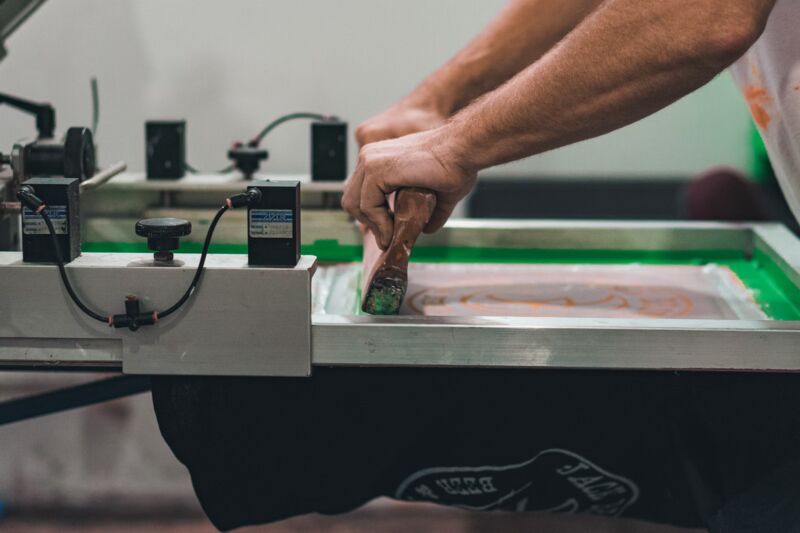
Screen printing for apparel—ideal for bulk orders, bold designs, and long-lasting prints for teams and events

Screen Printing

Screen printing is usually the best value when you’re ordering in bulk and want a clean, durable result for volunteer teams, VBS, retreats, and other large church group t-shirts.

DTG printing for apparel—great for smaller runs and full-color artwork with a soft, modern print feel.

Direct to Garment (DTG)

DTG can work well for smaller runs on the right garments, especially when you want a softer print feel and the artwork is full-color..

Direct to Film (DTF)

DTF is a great fit when your design has lots of detail and strong color, or you want consistent results across many sizes and garments—common for youth group shirts and event graphics.

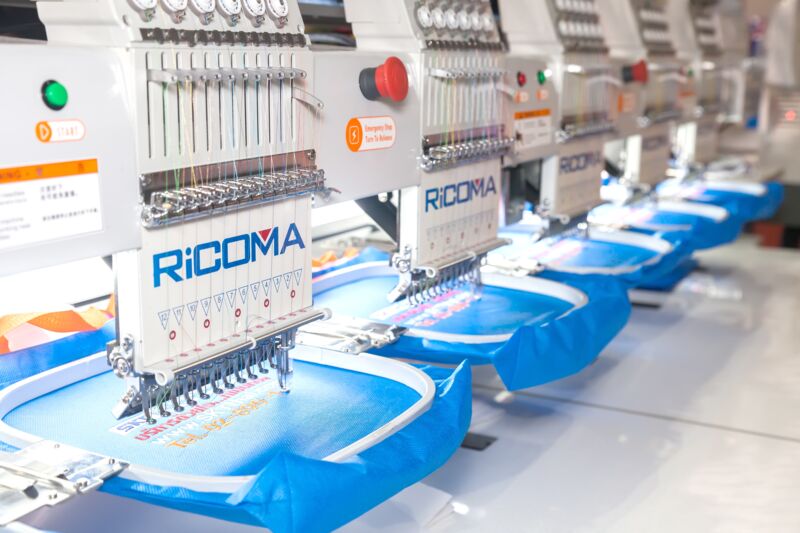
Embroidery for apparel—premium stitched logos for polos, hats, and uniforms built for repeat wear and durability.

Embroidery

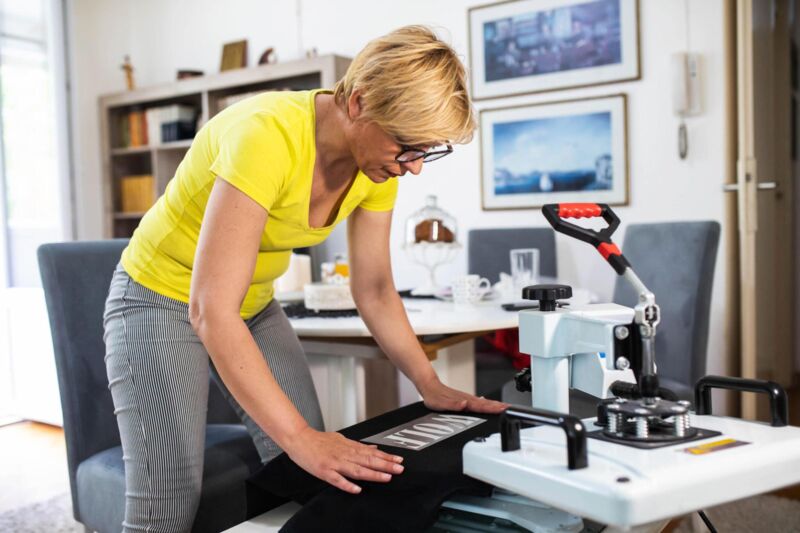
Embroidery is the go-to choice for polos and hats when you want a premium, long-lasting logo—especially for staff apparel.

Vinyl Printing

Vinyl (HTV) is best when you need clean, simple text or numbering, or when you’re personalizing a smaller set—like adding names, roles, or a single-color mark. 

How Pricing Works for Construction & Trades Orders

Cost is usually predictable when you know what drives it. Construction and trade orders typically change based on a few clear factors:

  • Quantity: larger runs usually reduce per-piece cost
  • Placements: front/back/sleeve prints add production steps
  • Garment choice: heavyweight vs performance vs long sleeve changes the base cost
  • Design complexity: more detail and multiple locations can add labor
  • Personalization: names and roles require extra handling

If you’re deciding between methods, we can quote two paths side-by-side (for example, bulk screen printed work t-shirts versus full color logo work shirts) so decision-makers can choose the best fit without guessing.

Turnaround and Deadlines

Fast turnaround is possible—but timelines only work when approvals and planning stay tight. Most delays don’t come from printing; they come from waiting on proof approval, switching garments midstream, or collecting sizes too late. Ask for rush t-shirt printing or same-day t-shirt printing for last-minute orders. 

The safest path is simple: send artwork early (even if it’s rough), lock garment choices before the proof cycle drifts, and approve the proof as soon as it looks right. When late additions happen, treat them as a clean add-on run using saved specs instead of reworking the whole order.

How to Order Gym Apparel (Proof-First, Step by Step)

If you want a clean process that’s easy to approve internally, this workflow keeps everything organized—from first idea to delivery:

  • Share your goal: crew type, roles, timeline, and where the shirts will be used
  • Send artwork or references: logo files, colors, and any must-have text
  • Choose garments: we recommend options based on comfort, wash durability, and availability
  • Approve the proof: one clear proof before production begins
  • Collect sizes: one spreadsheet grouped by crew/role (field, lead, office)
  • Produce + deliver: we print to match the approved proof and ship as requested
  • Save specs for reorders: so replacements and new hires match later

When teams want fewer surprises, the proof approval step is the key—once it’s approved, everything downstream becomes predictable.

Design & Placement Guidance for Real Jobsite Use

Jobsite apparel has to stay readable at a distance and remain recognizable when people are wearing PPE layers. Designs that look great on a screen can fail in the field if text is too thin, lines are too fine, or the placement ends up covered by vests and harnesses.

Rules that prevent print regret:

  • Contrast first: make the logo stand out in sun, shade, and shop lighting
  • Avoid tiny lines and small text that disappear at a distance.
  • Keep placements consistent across crews for a unified look
  • Use the right placement for the job:
  • Left chest logo: daily wear, clean branding
  • Back print: fast identification across the site
  • Sleeve print: secondary branding or crew marker
  • Pocket logo: a workwear style that still reads clearly

If you need short-run role markers, vinyl/HTV can work well for simple role text without changing the main layout

Why Construction Teams Choose Custom Tees

Construction and trades teams come to CustomTees when they need apparel that works in real conditions—not just in a mockup. We keep your uniform system durable, readable, and approval-friendly so crews stay consistent across projects, seasons, and reorders.

You’ll get predictable proofs, clear placement guidance, and a repeatable process that supports new hires, replacements, and multi-crew coordination—without reinventing the shirt every time.

Request Quote
Design Now
Construction & Trades Apparel – Frequently Asked Questions

Frequently Asked Questions

1) What’s the best print method for work shirts that get washed constantly?

For frequent-wash uniforms, screen printing is usually the best choice for bold logos and large runs because it’s built for repetition. If your logo has gradients, fine detail, or lots of colors, DTF can be a great option while still holding up well. The best method depends on fabric, artwork detail, and how hard the shirts are used—so we recommend based on real jobsite conditions.

2) Screen printing vs embroidery for workwear—what should I choose?

Embroidery gives a clean, uniform-ready look and works great for a small left chest logo on supervisors or office staff. Screen printing is ideal for a bold back print that needs to read from a distance on active jobsites. Many teams use both: embroidery for polished branding and printing for crew visibility. The right setup depends on role, placement, budget, and logo detail.

3) DTF vs screen printing for work shirts—when does DTF make more sense?

DTF is a strong option when you need full color logo work shirts, small text, or complex artwork that screen printing would simplify too much. Screen printing usually wins for large runs with simple logos because it can be more cost-effective and very durable. If you’re ordering for multiple crews, we can compare both options so you can choose confidently.

4) DTG vs DTF for detailed logos—what’s the practical difference?

DTG prints directly into the fabric and can look great on certain cotton tees with detailed artwork. DTF is often more versatile across different garment types and is a popular pick when you need consistent results on blends or performance fabrics. If your teams wear mixed styles, DTF can be a safer “one-method” solution.

5) How should I place a logo on work shirts (left chest vs back) for jobsite visibility?

A left chest logo looks professional and works for daily wear, but it doesn’t always solve fast identification. A bold back print is the easiest way to make crews readable from a distance—especially during site walks or safety meetings. A common system is a small left-chest logo plus a bold back identifier (company/crew/role), with a sleeve print as an optional add-on.

6) Can you add name embroidery on work shirts for foremen and leads?

Yes—name embroidery is one of the most useful upgrades for supervisors and foremen because it removes guesswork on the jobsite. The best results come from keeping it clean: a simple chest logo with a name line or role labels that stay readable. If you want FOREMAN or SAFETY, we’ll place it so it doesn’t compete with the main logo.

7) Do hi vis shirts with logo stay compliant if we add prints?

They can, but placement and design choices matter. The goal is to keep visibility features effective and keep branding readable without overcomplicating the layout. Clean artwork, high contrast, and avoiding overly dense designs usually work best. If you have site requirements, we’ll recommend safe sizing and placement for your custom hi vis safety shirts.

8) ANSI Class 2 safety shirts vs Class 3 safety shirts—what’s the difference for crews?

In simple terms, ANSI Class 2 safety shirts are commonly used when you need enhanced visibility in many work environments, while Class 3 safety shirts are used when maximum visibility is needed, especially in higher-risk or low-light situations. The right choice depends on your safety requirements and work conditions. Share your use case and we’ll help you choose the right garment and layout.

9) What’s the typical turnaround time for bulk work shirts?

Turnaround depends on proof approval timing, garment availability, production schedule, and delivery. The biggest delays usually come from waiting on proof approval, changing garments midstream, or collecting sizes late. If your schedule is tight, send artwork early, lock garments fast, and approve the proof quickly. Late adds are easiest as a clean reorder using saved specs.

10) How do I reorder work shirts for new hires without mismatches?

Reorders are smooth when your original specs are saved: same garment style, color, placements, and the exact approved proof. We recommend keeping a simple uniform spec sheet so new-hire orders don’t drift. That’s how replacements and additions match the first run, even months later—especially for a uniform program for construction crews.

11) Should I choose pocket tees or standard tees for trade uniforms?

Pocket tees feel like true workwear and are popular with trades because they’re practical and familiar. Standard tees are better if you want a cleaner front layout without the pocket affecting placement. If you want pocket tees with branding, we’ll size and position the logo so it reads cleanly and doesn’t crowd the pocket.

12) Heavyweight work t-shirts vs moisture wicking work shirts—what holds up best?

Heavyweight work t-shirts are great for durability and a rugged feel. Moisture wicking work shirts are ideal for heat and high activity because they stay breathable and dry faster. Many teams standardize the look (same placements and colors) while offering two fabric options—heavyweight for general use and performance for hot days.

13) Are long sleeve work t-shirts worth it for crews?

Long sleeve work t-shirts are useful for sun coverage, cooler mornings, and a consistent uniform look across seasons. They also let you add sleeve identifiers without changing the main layout. If your team wears PPE layers, we’ll guide placements so the branding stays visible and balanced.

14) How do you make logos readable from a distance on an active jobsite?

Readability comes down to contrast, thickness, and simplicity. We recommend high-contrast ink and garment combinations, thicker lines, and avoiding tiny text. A small front logo works up close, but a bold back print usually solves the “spot them fast” problem. If you share your logo, we’ll recommend the cleanest layout for jobsite visibility.

15) Can you do multi-location printing (front, back, sleeve) for crew shirts?

Yes, and it’s common when you need both professionalism and visibility—like a left chest logo plus a bold back print, with a sleeve mark for crew or role. Multi-location printing adds steps, so it’s best when it solves an operational need. If you’re optimizing for budget, we’ll recommend the placements that deliver the most impact.

16) What’s the easiest way to collect sizes for a 50–200+ crew order?

The cleanest method is one spreadsheet grouped by crew/role (Crew A, Crew B, Leads, Office) with youth/adult separated if needed. Set a deadline before proof approval so production can stay on track. We also recommend a small buffer for replacements. This keeps bulk construction t-shirts organized and makes reorders painless because the system is already built.

FIND US

Cumberland Mall
(Lower Level Kiosk In front of
Apple Store)
2860 Cumberland Mall #5511,
Atlanta, GA 30339

CALL US

404-424-3111

EMAIL US

customtees10@gmail.com

Your cart is empty
Search